
Refrigerators, freezers, wine cellars and wine coolers, water dispensers, air conditioners and dehumidifiers make our daily lives more comfortable. But few people know that these appliances contain refrigerant gases, also called halocarbons, which can have a significant environmental impact if not properly handled at the end of their life.
What is a refrigerant gas?
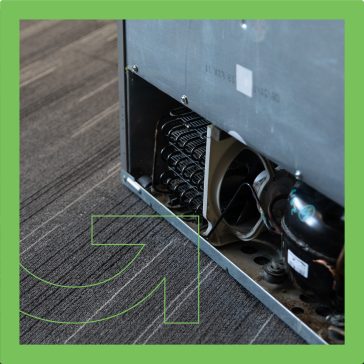
A refrigerant gas is a substance used inside appliances to produce cold. It circulates through the system (compressor, pipes, heat exchangers) to transfer heat to the outside and keep the interior of the refrigerator cold, or produce cool air in the case of an air conditioner.
But that’s not all: these gases are also found in the insulating foam surrounding the appliance, as is the case in a refrigerator. This foam, made of polyurethane, is blown with foaming agents that contain halocarbons. The amount of gas in the insulating foam can be up to about four times greater than the amount circulating in the cooling circuit itself.
That’s why it’s even more important to never leave an appliance on the curb or attempt to dismantle it yourself. The gases can be released into the atmosphere, causing significant environmental harm if they are not properly recovered through the GoRecycle network.
How have refrigerant gases evolved over time?
Over the years, the gases used in refrigerators, freezers and air conditioners have changed significantly. Some have been removed from the market because they were too harmful to the environment.
Old gases (now banned) – CFCs and HCFCs
Used mainly before the 2000s, but still encountered in our operations.
- They damaged the ozone layer.
- Their use is now prohibited or being phased out.
Gases still in use – HFCs
- Do not harm the ozone layer
- But are powerful greenhouse gases
- Their use is increasingly restricted in Quebec
Newer technologies – HFOs
- Much less harmful to the climate
- No effect on the ozone layer
- Increasingly used in modern appliances
Even though gases today are more environmentally friendly than before, they must still be recovered and properly handled at the end of their life.
How can I tell which gas is in my appliance?
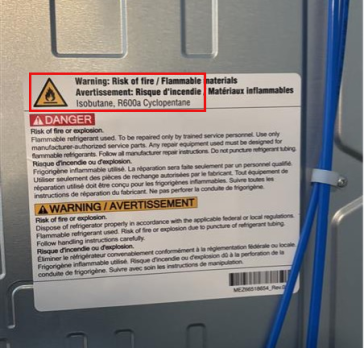
Good news: the information is often easy to find.